By Sarah McNeil MD, FAAFP
As I’m sure many of you can relate to, motivational interviewing has been transformative in my professional and, if I’m being honest, personal life. This is even more true for me since I joined the Contra Costa Health Care for the Homeless (HCH) Team, where I serve some of our most vulnerable and isolated community members facing real barriers to improving their health.
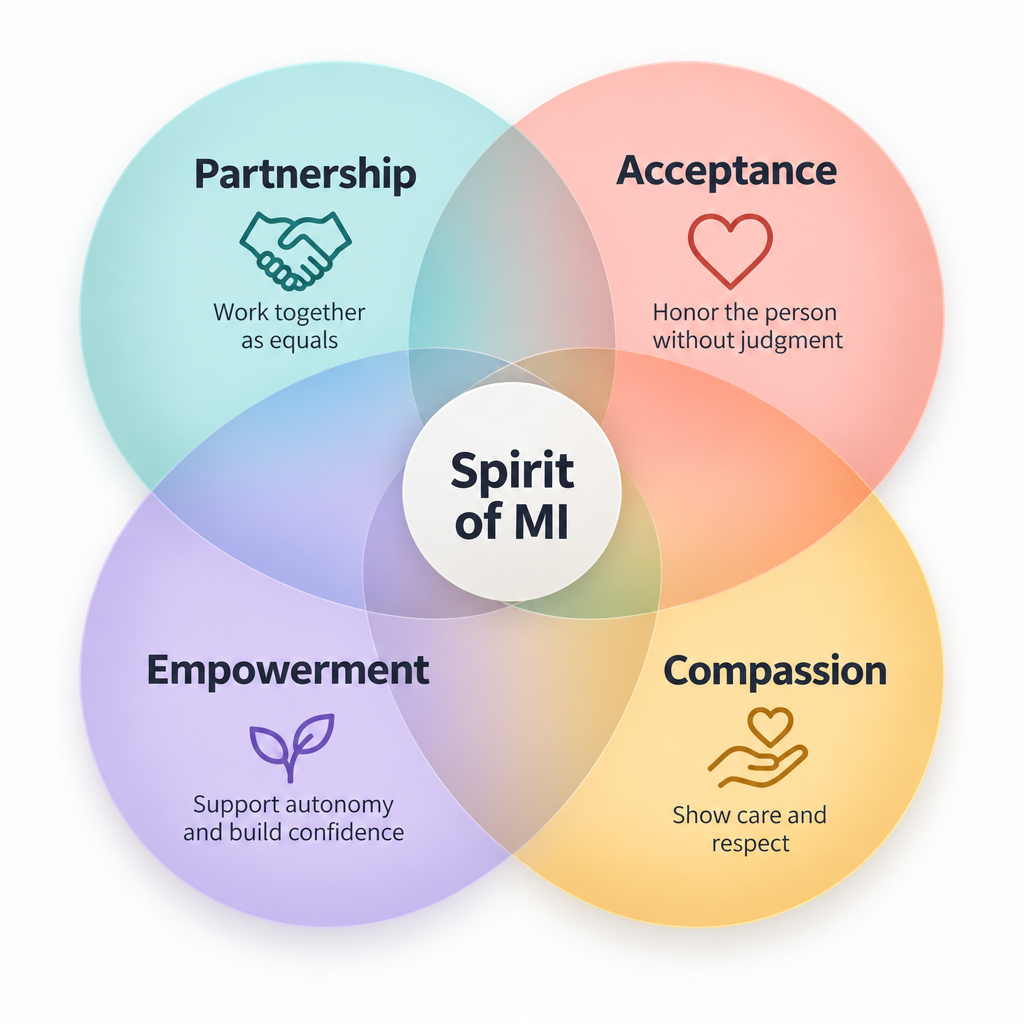
For those who are less familiar with motivational interviewing, or MI, it is a form of guided interview to help patients help themselves by evoking personally meaningful reasons for people to change their health behaviors. The spirit of MI is four-fold, and asks us to truly listen to, collaborate with, and support our patients, considering all four aspects of the framework: Partnership, Acceptance, Empowerment and Compassion.
 This past summer I attended the national HCH conference and participated in an MI pre-conference session. And like so many discussions about MI, this one was extremely eye-opening for me. Here are a few key insights from the conference that I found particularly helpful:
First, monitor your "fix-it" reflex. This one is hard, but unsolicited advice, however well-intentioned, can feel invasive and counterproductive. Instead, step back and make space for a patient's own internal drive to surface.
Second, listen with curiosity. The classic OARS Framework (Open-ended questions, Affirmations, Reflective listening, and Summaries) is a great tool. When reflecting, attempt a "gentle guess" about what your patient is experiencing. For example, saying, “It sounds like you might be feeling overwhelmed, is that how it feels to you?” shows genuine concern. Before you finish, ground the conversation with simple checks like, "I want to make sure I understand what you are saying. Did I miss anything?"
Third, offer individualized affirmations. The patient only knows that we truly see them when we can reflect their core values and strengths back to them. Acknowledging their resilience or commitments in specific ways evokes far deeper motivation than generic praise ever could.
We all can integrate motivational interviewing into our patient encounters, even on a busy day. To start, identify one potentially challenging patient visit each day where you commit to getting out of the way. Silence the impulse to advise. Sit back, offer genuine non-verbal presence, and ask questions that help your patient’s values and goals to emerge naturally. Remarkable shifts happen simply when patients feel completely heard.
Resources
Contra Costa Health Care for the Homeless
Circle the City, Phoenix, Arizona
Motivational Interviewing Network of Trainers (MINT)
National Health Care for the Homeless Council
SAMHSA Advisory: Using Motivational Interviewing in Substance Use Disorder Treatment
Deep appreciation goes to Lily Catalano from the national HCH team and Rafael Martinez from Circle the City in Phoenix, Arizona in helping me nurture my MI skills.